


Many people begin learning kanji wondering how to understand kanji meanings and feel confident at first. Recognizing meanings feels like real progress. Then reality sets in when reading those characters aloud becomes difficult. The problem is not effort or ability, but not knowing how kanji reading works.
Knowing the Meaning but Struggling to Read Kanji

This is a pattern I see again and again. Learners understand kanji meanings but hesitate the moment they try to read them. They recognize Japanese words from anime, manga, or textbooks, yet saying them out loud does not come naturally. That confusion often leads people to search for how to understand kanji japanese.
This stage confuses many learners who believe they already know how to understand kanji meanings, yet still struggle to read them. They assume something is wrong with their memory or study habits. In reality, the way people usually teach kanji causes this issue. Teachers often separate meaning and sound from the start.
When learners study meaning first and sound later, a gap forms. Over time, that gap becomes harder to close. Reading feels slow and uncertain. Fluent readers do not experience this separation and connect meaning and sound at the same moment.
The Invisible Wall Many Japanese Learners Experience
Almost every serious learner reaches a point where progress feels blocked. Many describe this moment as hitting an invisible wall. Study time increases, but reading speed does not. Motivation often drops here.
By this point, learners usually understand grammar and common words. Yet kanji reading becomes slow and uncomfortable. Reading Japanese no longer feels enjoyable. It starts to feel like work instead of communication.
This is when learners compare themselves to native speakers. They wonder why reading looks effortless for others. Japanese readers look for patterns instead of stopping to remember each kanji. This wall comes from how learners study, not from their ability.
Why Traditional Kanji Study Methods Lose Effectiveness
Most learners start with repetition-based study. Most lessons spend a lot of time on stroke order and copying characters. Writing kanji feels structured and safe. Early progress reinforces this habit.
At first, this approach appears effective. Writing improves, and characters feel familiar. However, progress slows as kanji numbers increase. Reading ability does not keep up with writing skill.
Many learners know stroke order perfectly but still cannot read sentences smoothly. They search for how to quickly memorize kanji. Trying to remember everything creates mental overload. Reading needs structure, not endless repetition.
Stroke Order Supports Writing but Not Reading

Stroke order plays an important role in writing. It helps kanji look balanced and clean. Writing accuracy improves with practice. This skill has value, especially for handwriting.
However, stroke order does not explain how readers actually read kanji. Writing and reading rely on different mental processes. Many learners confuse one for the other. This confusion slows progress.
Reading depends on sound recognition and prediction. Writing depends on hand movement and muscle memory. These skills overlap only slightly. Stroke order alone cannot unlock reading ability.
Kanji Functions as a Logical System
Kanji often looks complex at first glance. With time, patterns begin appearing. Most characters combine a meaning part with a sound part. This structure repeats across the writing system.
Once learners notice these patterns, reading feels easier. Characters stop feeling random. Guessing becomes more accurate. Confidence grows naturally through exposure.
Many people ask if there is a trick to reading kanji. Shortcuts do not work, but logic does. Kanji functions as a system that readers can decode. This changes how learners approach reading and how to understand kanji meanings more clearly.
Sound Patterns Make Kanji Easier to Read
I often see learners trying to memorize readings one by one. This creates too many disconnected details. Progress feels slow and tiring. Motivation drops quickly as lists grow longer.
What makes reading easier is recognizing sound patterns. Many kanji share the same reading components. These patterns appear across many Japanese words. Learning them reduces effort dramatically.
This explains how to get better at reading kanji over time. Improvement comes from recognition, not memory lists. Japanese readers rely on this naturally. Learners can build the same habit with practice.
How Japanese Readers Process Kanji

Japanese readers do not stop to analyze every stroke. They predict readings based on familiar patterns. Context guides understanding. Reading flows forward without hesitation.
Meaning parts and sound parts appear instantly. The brain confirms the reading almost immediately. Reading does not pause or reset. Even unfamiliar kanji rarely stop the process.
This explains how Japanese read kanji so smoothly. Flow matters more than perfect accuracy. Experience builds confidence over time. Practice strengthens this ability naturally.
The Real Number of Kanji You Need to Know
Learners often worry about numbers. They ask how many kanji do you need to know. Others wonder if 1000 kanji are enough. These concerns are understandable and common.
For everyday reading, recognizing around 1000 kanji often works. Real-world reading matters more than totals. Signs, menus, labels, and short texts appear first. Practical use builds confidence.
Being able to read signs or menus matters more than knowing a specific number. Exposure improves reading faster than counting progress. Use matters more than targets. Experience matters most.
Reading Kanji Without Fear or Panic
Fear plays a larger role than many realize. Long sentences trigger hesitation. Anxiety slows reading. Confidence drops quickly when pressure increases.
Fear blocks reading more than difficulty. Calm reading improves flow. Structure reduces stress. Confidence grows through repeated exposure.
Some beginners ask if reading Japanese without kanji is possible. In real life, kanji is essential for clarity and speed. Structure replaces guessing. Fear fades with experience.
A Visual System That Makes Kanji Reading Easier
Many learners reach a point where effort no longer helps. They understand meanings but still struggle to read smoothly. This stage feels discouraging. Progress feels stalled despite hard work.
This usually happens because learners study kanji individually. Connections remain hidden. Patterns stay invisible. Reading feels uncertain and slow.
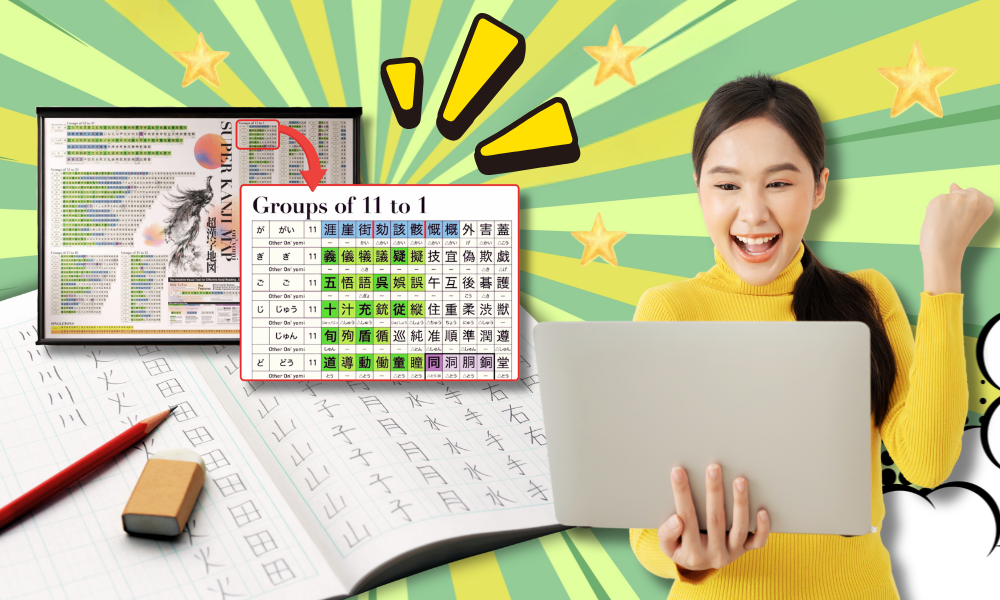
One effective solution uses a visual system. It shows how kanji readings connect. Sound patterns become visible across many characters. Reading becomes easier to predict.
A well-known example of this approach is the Super Kanji Map. It organizes kanji into sound families instead of isolated lists. One sound unlocks many characters at once. Mental load drops significantly.
To see this approach in action, visit the Super Kanji Map.
Common Questions Learners Have About Kanji
Learners often ask how to explain kanji clearly. Others want to know explain kanji in japanese and when to use it correctly. These questions appear frequently at every level. Confusion is common.
Clear explanations focus on meaning, sound, and context. Simplicity works best. Overloading details causes confusion. Clarity builds confidence for both speaker and listener.
Some learners find sound patterns such as ょ う confusing. These small kana change sound, not meaning. Exposure makes them familiar over time. Reading Japanese characters from images becomes easier.
Understanding Kanji as a System, Not a Memory Test
Many learners misunderstand how to understand kanji meanings because they focus on memory instead of structure. Understanding kanji meanings does not come from remembering more characters. Learning how kanji work as a system matters most. Patterns replace stress.
When learners move from trying to remember everything to decoding patterns, reading feels calmer. Confidence grows through use. Flow replaces hesitation. Practice brings stability.
With the right approach and tools like the Super Kanji Map, how to understand kanji meanings stops feeling confusing and starts to feel logical. Reading Japanese becomes achievable instead of overwhelming.
10 Reviews
Experience the thrill of [url=https://ice-fishing-game-malaysia.com/]ice fishing real money[/url] and dive into an exciting world of Ice Fishing today! Payment solutions are adapted to support both local Malaysian and global users.
Используйте [url=https://t.me/s/winelab_promokod]Винлаб купон на скидку[/url], чтобы получить выгодную скидку на первый заказ в приложении. Сегодняшние потребители активно ищут скидки и промокоды для выгодных покупок.
Если вы хотите повысить свои навыки продвижения, обязательно пройдите [url=https://t.me/s/seo_pro100]уроки XRumer и GSA[/url], чтобы эффективно использовать все возможности этих инструментов. Хотя новичкам это кажется сложным, практика способствует быстрому освоению.
Ознакомьтесь с нашими [url=https://seo-pro100.ru/keysy/]примеры продвижения[/url], которые содержат показывают эффективные методы и подходы к выводу сайтов в ТОП3 в Москве и по России. Целенаправленная работа с площадками привела к росту авторитетности домена и видимости по конкурентным запросам.
Players in Bangladesh are increasingly choosing [url=https://dailydhakareport.com/]dailydhakareport.com[/url] for online gaming and rewards. The platform provides access to popular games like slots, rummy and aviator with a welcome bonus for new users. Visit the site to download the APK and start playing today.


- Shin Kawamoto


- Shin Kawamoto

- Shin Kawamoto

- Shin Kawamoto