
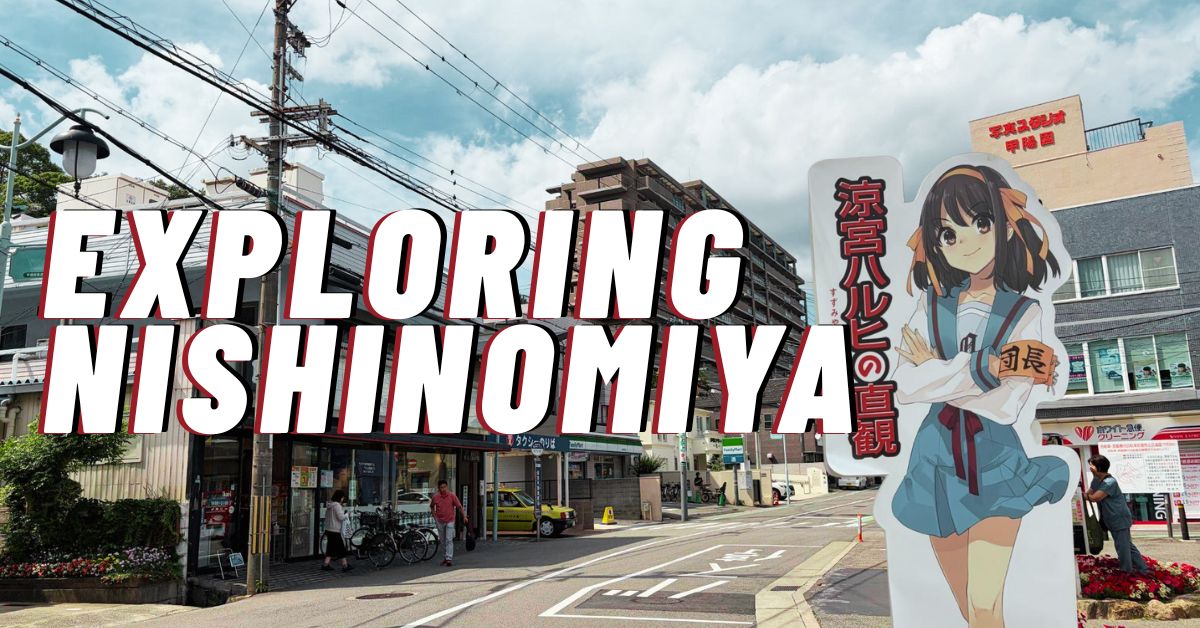
For many anime fans, Nishinomiya is best known as the real-life area connected to The Melancholy of Haruhi Suzumiya. But Nishinomiya is not a typical sightseeing destination. It is first and foremost a residential city, known as one of Hyogo’s comfortable commuter towns where families, students, and local residents go about their everyday lives.
That ordinary atmosphere is exactly what makes it so interesting for a Haruhi-inspired visit. The traces of the series are not separated from the city. They are hidden inside station areas, local cafés, quiet streets, and hillside neighborhoods. Haruhi feels as if it has quietly blended into Nishinomiya’s daily rhythm.
If the pilgrimage guide is about finding specific locations, this guide is about slowing down and experiencing the city itself. Nishinomiya is best enjoyed when you notice how small pieces of the anime still seem to live within an ordinary residential town.
You can view our Haruhi Nishinomiya pilgrimage guide here.
Feel the Everyday Life Around Nishinomiya-Kitaguchi
Nishinomiya-Kitaguchi is one of the easiest places to begin a Haruhi-inspired visit. It is well connected by train and works as a convenient starting point between Osaka, Kobe, and the quieter residential areas that fans often associate with the series.
At first, the station area may not feel like a major anime destination. It is busy, practical, and full of people going about their normal day: students, commuters, families, shoppers, and local residents. But that is exactly why it feels connected to Haruhi. The world of The Melancholy of Haruhi Suzumiya is memorable because extraordinary events happen against a very ordinary background.
Around Nishinomiya-Kitaguchi, you are not entering a themed space. You are walking through a real commuter city where the anime’s atmosphere has become one quiet layer within the lives of the people who live there.
Take a Coffee Break at Coffee House Dream
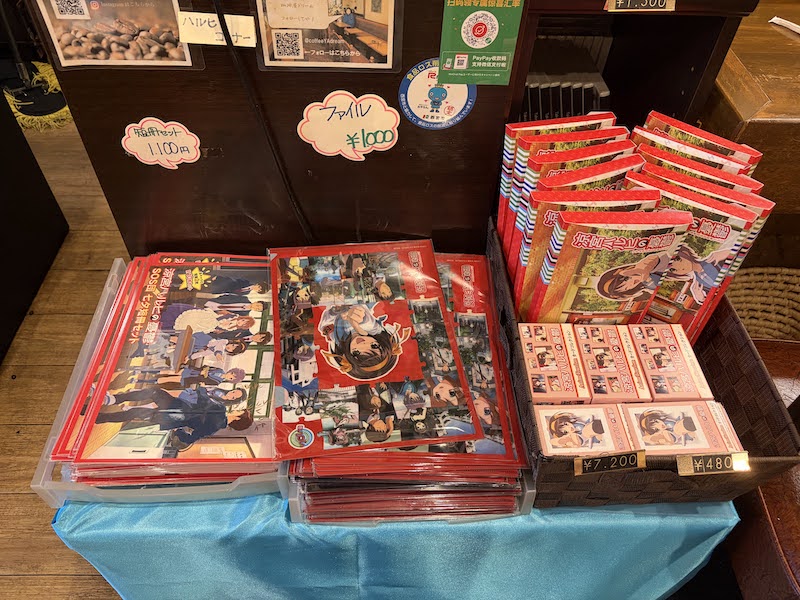
One of the most memorable local experiences for Haruhi fans is visiting Coffee House Dream. For many fans, this café is more than a place to rest. It is a meaningful stop connected to the atmosphere of the series, and it is one of the places where the relationship between Haruhi and Nishinomiya feels especially warm.
What makes Dream so enjoyable is that the Haruhi elements are present, but not in an overwhelming way. Inside the café, you can find small references, fan items, and details that show the love people have for the series. These touches are scattered throughout the space in a subtle way, so part of the fun is noticing them little by little.

If something catches your eye, it is best to politely ask the staff before taking photos, especially inside the café. With permission, these small details can become some of the most special photos from the day. They are not just decorations. They show how much affection fans have brought to this place over time.
At the same time, Dream is not only a Haruhi fan spot. That is what makes it even more interesting. When I visited, many of the customers seemed to be regular local visitors rather than anime pilgrims. People were simply drinking coffee, talking, reading, or spending a normal afternoon there. In that sense, Dream is a place where Haruhi fans and Nishinomiya’s everyday life naturally cross paths.
This balance is what makes the café special. It still functions as a real local coffee shop, but for fans, it also carries another layer of meaning. You can enjoy a drink, take a break from walking, and still feel connected to the anime. Even the rest time becomes part of the Haruhi experience.
Rather than treating Dream like a checklist location, I recommend spending some time there properly. Order something, sit down, look around carefully, and enjoy the atmosphere. The café gives you a chance to experience Haruhi not through a dramatic landmark, but through a quiet local space that continues to be part of the city’s daily life.
Walk Through the Koyoen Hillside Area
After spending time around Nishinomiya-Kitaguchi and Coffee House Dream, the Koyoen area gives you a completely different side of the city. This hillside neighborhood is one of the most memorable parts of a Haruhi-inspired visit, not only because of its connection to the series, but also because of how strongly it shows Nishinomiya as a residential town.
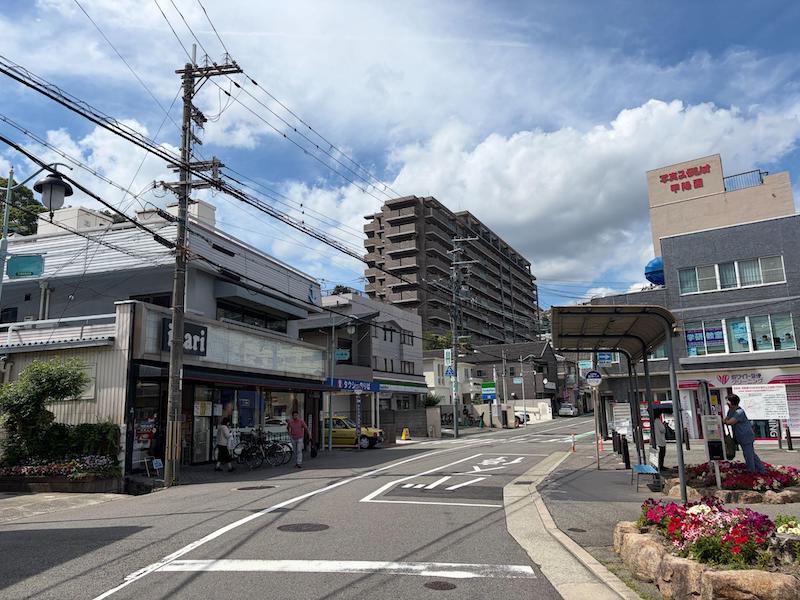
Koyoen feels like a symbol of Nishinomiya as a commuter city. It is a place where people actually live, surrounded by houses, narrow roads, trees, and steep slopes. The area does not feel like a tourist attraction. It feels like a neighborhood built into the hills.
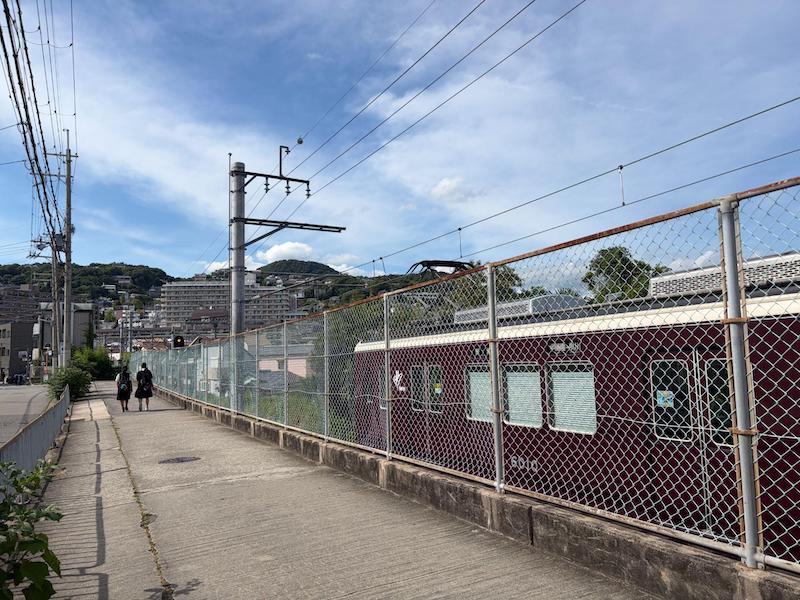
Because the area is located on the mountain side, there is also a lot of nature around it. The trees and greenery make the walk feel different from the station area, and I imagine the scenery must change beautifully with the seasons. In spring, summer, autumn, and winter, the colors and atmosphere would probably feel quite different.
A Glimpse at Local Life in Nishinomiya
Walking through Koyoen can feel strangely like hiking through a residential area. The roads climb higher and higher, but instead of entering a forest trail, you are moving through a neighborhood where people live. Houses, cars, plants, stone walls, and glimpses of the city below all appear along the way. It creates a unique feeling that is hard to describe until you actually walk there.
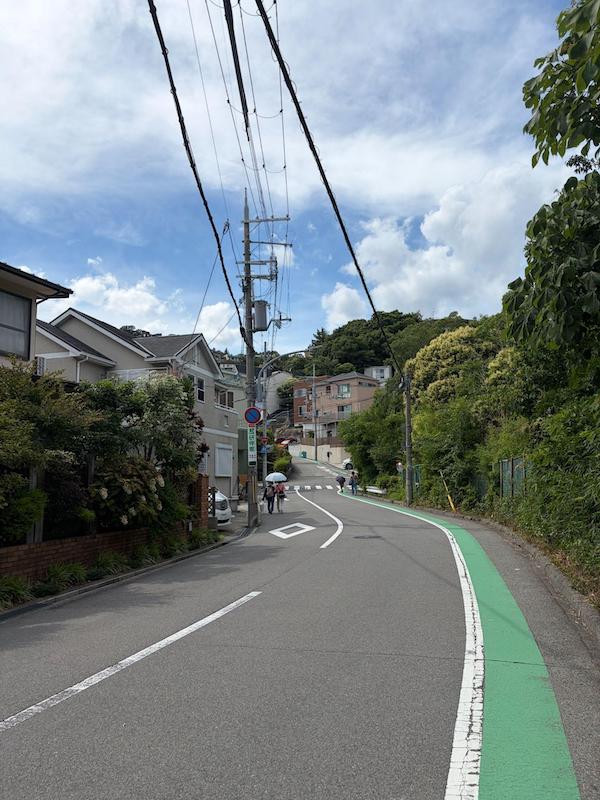
The slopes are quite steep. Even if you know in advance that the area is hilly, it can still be harder than expected. However, that effort is part of the experience. As you climb, there are moments when you turn around and suddenly see a beautiful view behind you. From higher points, the station area and city of Nishinomiya spread out below, and you can feel how far you have come. It gives a small but very real sense of achievement.
This view is one of the best parts of walking through Koyoen. It is not only about finding a famous anime-related slope. It is about physically experiencing the height, the distance, and the shape of the city. The uphill walk makes you more aware of the setting in a way that photos alone cannot.
One thing to be careful about is traffic. Because the roads are steep and residential, there are not always many people walking or cycling, but cars pass through more often than I expected. Visitors should stay aware of their surroundings, avoid standing in the road for photos, and be careful when stopping to look back at the view.
Koyoen is also a residential area, so respectful behavior is very important. Avoid photographing private homes directly, blocking driveways, or speaking loudly. The best way to enjoy this area is to walk quietly and take in the wider atmosphere. The Haruhi feeling here does not come from one single spot. It comes from the combination of the hill, the views, the houses, the road, and the sense of everyday life continuing around you.
A Relaxed Haruhi-Inspired Afternoon in Nishinomiya
A good way to enjoy Nishinomiya is to plan the day loosely rather than trying to visit too many places. If the pilgrimage route is about efficiency, this kind of regional experience is about atmosphere.
For a relaxed afternoon, you could begin around Nishinomiya-Kitaguchi and spend a little time noticing the local rhythm of the station area. From there, visit Coffee House Dream for a proper break. This is a good point in the day to slow down, enjoy the café, and look for the small Haruhi details inside.
After that, head toward the Koyoen hillside area. Give yourself enough time there, especially if you want to walk slowly, take photos, and enjoy the view. The slopes can be tiring, so it is better not to rush. The most memorable part may not be one exact photo angle, but the feeling of climbing through the quiet residential streets and looking back over Nishinomiya from above.
This kind of route does not need many stops to feel complete. In fact, keeping the plan simple makes the experience better. Nishinomiya’s charm is quiet. It is not a city that needs to be packed with activities. A station area, a local café, and a hillside walk can be enough to understand why this place feels so closely connected to Haruhi.
The important thing is to let the city remain ordinary. That ordinary quality is the heart of the experience. Haruhi’s presence is not loud here. It is woven into the background of people’s daily lives.
The Everyday Charm Behind Haruhi’s World
Nishinomiya may not look like a dramatic tourist destination at first glance. That is exactly what makes it special. Its charm is built from ordinary things: train stations, cafés, slopes, residential streets, passing cars, local customers, and quiet views from the hillside.
For fans of The Melancholy of Haruhi Suzumiya, those ordinary places carry extra meaning. The series does not feel separate from the city. Instead, it feels as if it has quietly blended into Nishinomiya’s daily life.
A visit here is most rewarding when you allow the city to be itself. Walk slowly, take breaks, notice the details, and enjoy the calm atmosphere around you. Through Haruhi, Nishinomiya may feel familiar before you arrive. But once you spend time there, the city becomes memorable not only because of the anime, but because of its own quiet, everyday charm.

Nao is an Osaka based writer with a love for travel and anime. She loves exploring the Kansai region and hopes to inspire readers to visit Japan for their own pilgrimage experiences.
