
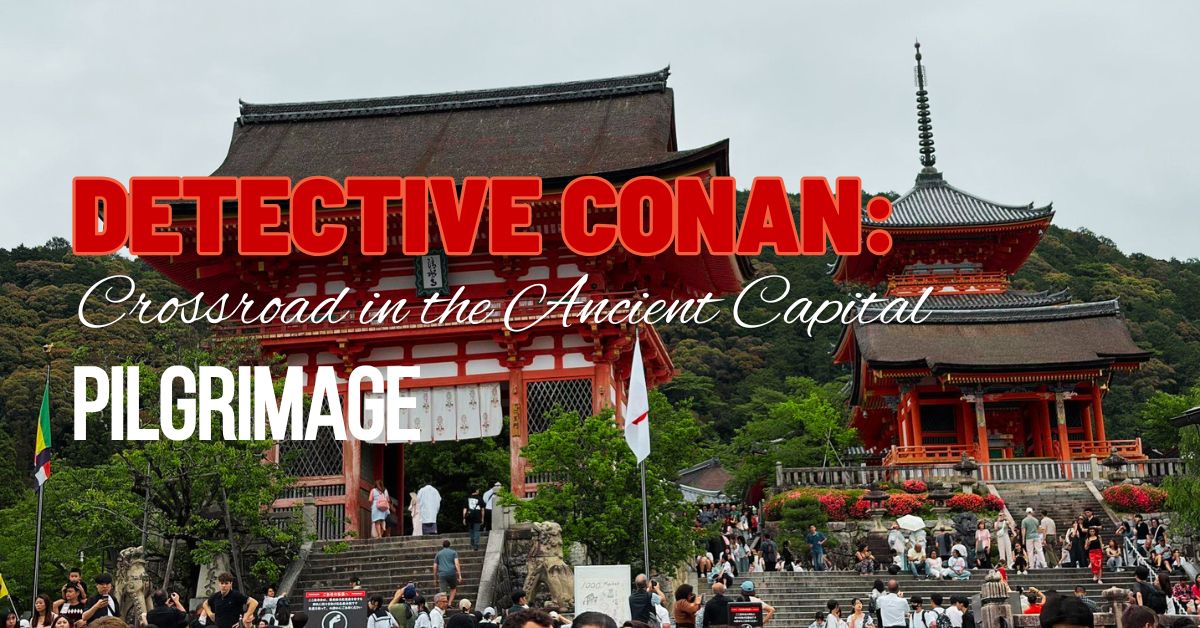
Kyoto is one of Japan’s most famous travel destinations, but for Detective Conan fans, the city has another layer of meaning.
This guide introduces a practical one-day Detective Conan pilgrimage route through Kyoto, designed especially for international fans visiting Kansai. The main route follows Kyoto Station, Gojo-Ohashi Bridge, the Kiyomizu-dera area, the Kamo River, and Pontocho. I have also included Kurama as an optional second-day add-on for fans who want to go deeper.
Rather than treating this as a checklist of locations, this guide is meant to help fans enjoy Kyoto as both a real city and an anime pilgrimage destination. The best part of walking through Kyoto is not always finding a perfect scene match. Sometimes it is the feeling of being in a place where the atmosphere of Detective Conan suddenly makes sense.
For a deeper Kyoto experience, also check out: Beyond the Detective Conan Route: Experiencing the Kyoto Atmosphere Between the Stops
Why Kyoto Matters in Detective Conan
Kyoto works especially well in Detective Conan because the city already feels like a place built from stories.
Compared with Tokyo, Kyoto has a slower and more layered atmosphere. It is full of temples, bridges, old streets, riverside paths, and traditional districts. Even when the city is crowded, it still carries a sense of history. That makes it a natural setting for cases connected to memory, old legends, family history, and emotional reunions.
For many fans, Kyoto is strongly associated with stories such as Crossroad in the Ancient Capital and the Scarlet School Trip arc. These stories use Kyoto not just as a background, but as part of the emotional and visual identity of the story. The city’s temples, streets, bridges, and traditional atmosphere create a mood that feels different from everyday urban Japan.
Kyoto also fits well with Heiji Hattori’s Kansai identity. Heiji brings a different rhythm and energy into Detective Conan, and Kyoto gives that Kansai atmosphere a more historic and dramatic setting. Walking through Kyoto as a fan, you can feel why the city works so well for stories involving mystery, friendship, romance, and old memories.
Suggested Anime Pilgrimage Route
This route is designed as a one-day Kyoto pilgrimage that balances famous sightseeing, Detective Conan-related atmosphere, and realistic travel planning.
A practical route would look like this:
Kyoto Station → Gojo-Ohashi Bridge → Kiyomizu-dera Area → Kamo River → Pontocho
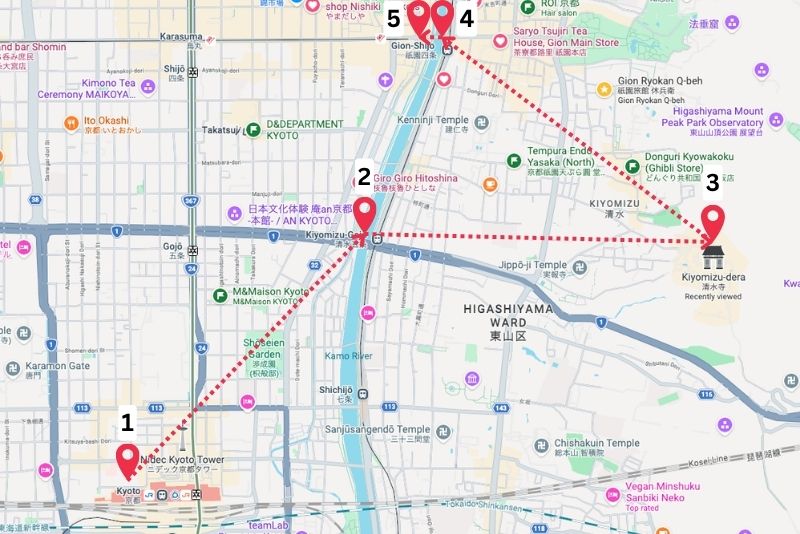
⭐️ Planning Tip:
If you start in the morning, you can begin at Kyoto Station, move toward the Gojo area, visit Kiyomizu-dera before the afternoon crowds become too heavy, then gradually return toward the river and central Kyoto. Ending around Pontocho works well because the area becomes more atmospheric in the late afternoon and evening.
As someone based in Osaka, I also think this route works well for travelers staying in Osaka during their Japan trip. Kyoto is close enough for a day trip, but the atmosphere feels completely different once you step into the temple streets, riverside paths, and traditional alleyways. That contrast is one of the reasons Kyoto is so enjoyable as a Kansai side trip.
Kyoto is often described as being laid out like a grid.
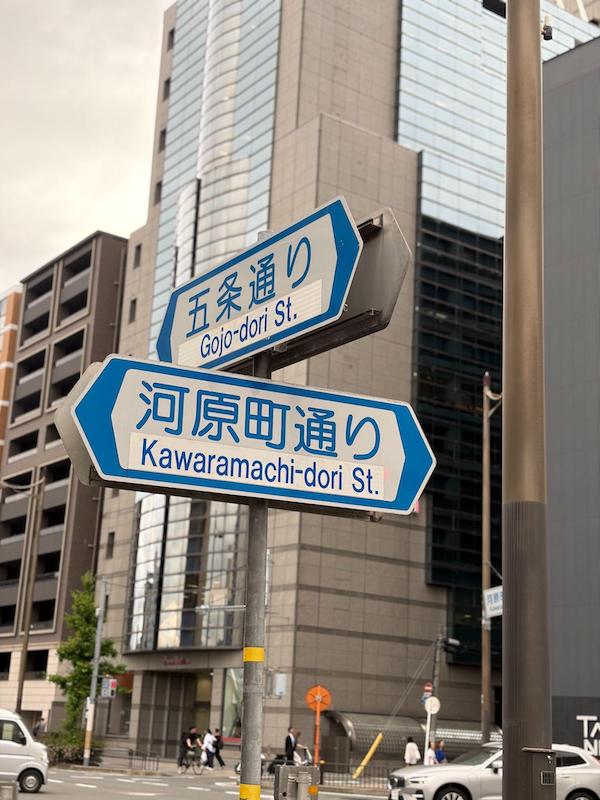
This is useful for travelers because many places and bus stops are named after street intersections. For example, Shijo-Karasuma means the area where Shijo Street and Karasuma Street meet. Kawaramachi-Gojo means the area around Kawaramachi Street and Gojo Street. Once you understand this pattern, Kyoto becomes much easier to navigate.
That said, Kyoto can still be tiring. Buses can be crowded, especially on weekends and during peak travel seasons, so it is often better to combine walking, trains, subway lines, and buses depending on the route.
Stop 1: Kyoto Station
Kyoto Station is a natural place to begin the pilgrimage.
For many visitors, this is the first moment they feel they have arrived in Kyoto. If you come by Shinkansen from Tokyo, Osaka, or another city, the station itself becomes part of the travel experience.
As a pilgrimage starting point, Kyoto Station also works well because it connects to almost everywhere in the city. From here, you can take a bus toward Gojo or Kiyomizu-dera, use the subway, or transfer to other train lines. For travelers based in Osaka, Kyoto is also very manageable as a day trip.
Stop 2: Gojo-Ohashi Bridge and the Kamo River
From Kyoto Station, the first main pilgrimage stop is Gojo-Ohashi Bridge near the Kamo River.
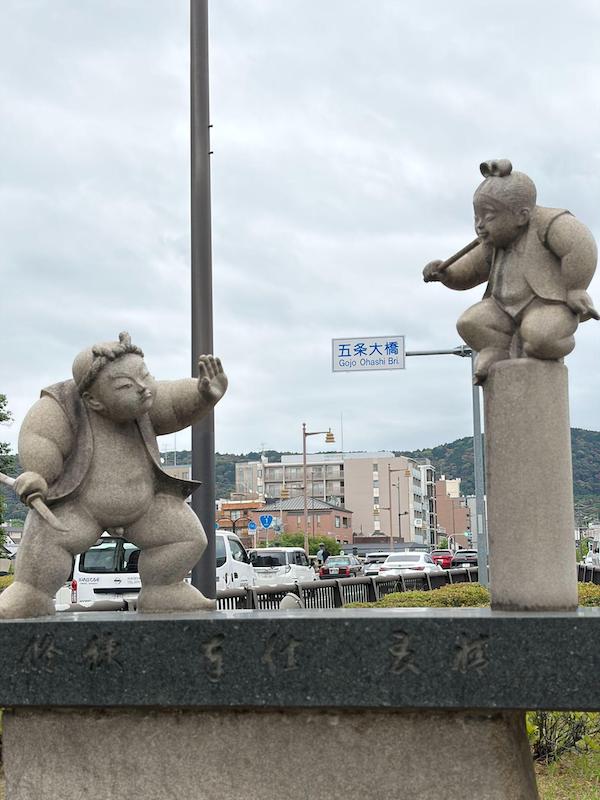
Gojo-Ohashi is an important bridge in Kyoto, and it carries a strong historical atmosphere. It is associated with the famous legend of Ushiwakamaru and Benkei, which gives the area a deeper cultural layer. For Detective Conan fans, this kind of historical background fits naturally with the series. Conan often uses real places with stories behind them, and Kyoto’s bridges are perfect examples of that.
The Kamo River is also one of the best places to slow down during a Kyoto walk. After the busy station area, the river gives the route more space. You can see people walking, cycling, sitting by the water, or crossing the bridges as part of daily life. This is not only a sightseeing spot, but a living part of Kyoto.
For an anime pilgrimage, this kind of location is valuable because it shows how the real city creates atmosphere. Not every pilgrimage stop needs to be dramatic. Sometimes a bridge, a river, and the surrounding streets are enough to remind you why Kyoto feels so fitting for Detective Conan.
Good photo ideas around this stop include the bridge itself, the river below, the riverside path, and wider shots that show the city around the Kamo River. If you enjoy walking and have enough time, continuing toward the Kiyomizu-dera area on foot gives you a better sense of Kyoto’s street layout. If you want to save energy, a bus or taxi can also be practical.
Stop 3: Kiyomizu-dera Area
Kiyomizu-dera is one of the strongest stops on this route because it combines classic Kyoto sightseeing with the feeling of a Japanese school trip.
For international visitors, Kiyomizu-dera is often one of the most iconic images of Kyoto. The temple’s wooden stage, hillside location, city views, and surrounding streets make it one of the most memorable places in the city. For Detective Conan fans, the area also has the feeling of a school trip: walking uphill through crowded streets, passing souvenir shops, taking photos, and experiencing Kyoto with a sense of excitement.
That school trip atmosphere is important. Detective Conan is a mystery series, but it also often captures everyday Japanese experiences: school trips, friendships, local travel, small emotional moments, and the feeling of visiting famous places together. Kiyomizu-dera naturally fits that mood.
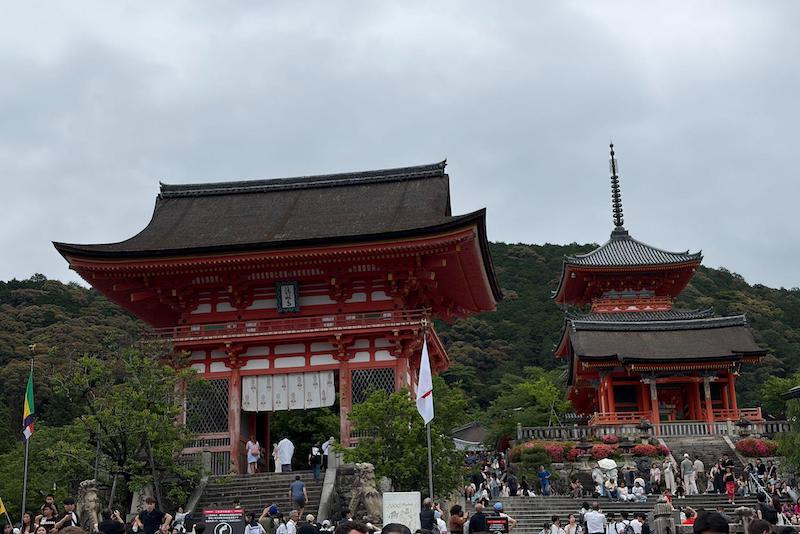
When visiting, I recommend arriving as early as possible. The area is extremely popular, and the approach streets can become very crowded. If you want better photos or a calmer atmosphere, morning is much better than midday. From personal experience, Kyoto can also be much harder to enjoy in the middle of summer. The uphill walk to Kiyomizu-dera, the crowds, and the humidity can be tiring, especially if you are carrying a camera. If you can choose your season, spring, autumn, or early winter are more comfortable for this route.
The walk toward the temple is also part of the experience. Streets such as Sannenzaka and Ninenzaka are full of traditional-style buildings, shops, and small details that feel very Kyoto. Even if you are not matching a specific scene, these streets help build the atmosphere of the pilgrimage.
Good photo spots include the approach to the temple, the wooden stage area, views over Kyoto, stone paths, shopfronts, and small architectural details. If you are using your own photography for an article, try to capture not only the famous scenery, but also the movement of the route: the climb, the crowds, the turns in the street, and the moments where the city suddenly opens into a view.
Travel Tip: 💡
Kiyomizu-dera is also a good place to remind readers that temples are religious sites. Even when visiting as an anime fan, it is important to be respectful, avoid blocking paths, and follow local rules about photography.
Stop 4: Kamo River and the Walk Toward Pontocho
After Kiyomizu-dera, the route can return gradually toward the Kamo River and central Kyoto.
This part of the day is important because it gives the route a more natural rhythm. If you only move from famous site to famous site, Kyoto can start to feel like a checklist. Walking back toward the river allows you to see smaller streets, local shops, and the everyday side of the city.
The Kamo River is one of Kyoto’s best places for this kind of transition. It connects different areas of the city while giving travelers a place to breathe. I especially recommend visiting the Kamo River in the afternoon or early evening, when it becomes a natural resting point between busier sightseeing areas. Sitting along the riverbank with a takeaway tea or coffee is one of the simplest but most relaxing ways to enjoy Kyoto. It gives the route a slower rhythm and helps the day feel less like a checklist of locations.
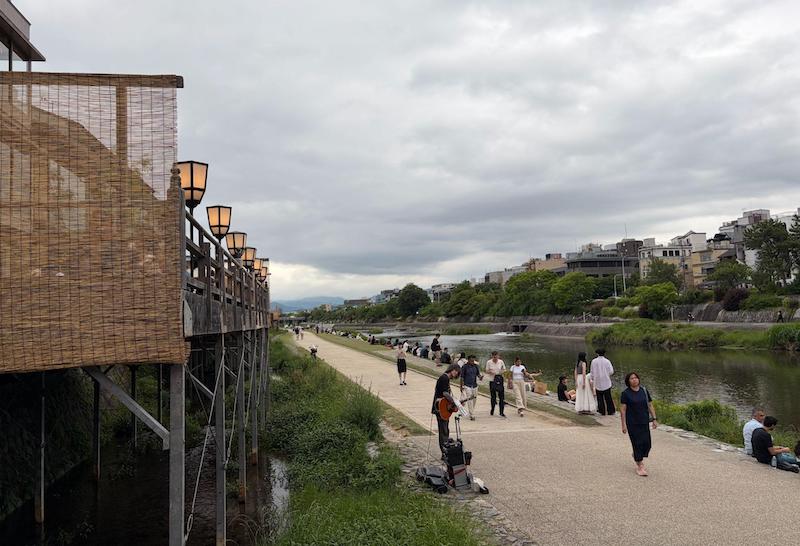
For Detective Conan fans, the river also helps connect the more dramatic pilgrimage stops with the ordinary city around them. Conan’s world is interesting because mysteries happen in places that still feel real. The Kamo River has that everyday realism.
If you have extra time before going to Pontocho, you can also consider walking through or near Miyagawacho. This area is one of Kyoto’s traditional entertainment districts and has a quieter, more local atmosphere than some of the more crowded sightseeing streets. It can be a good optional stop for travelers who want to feel another side of Kyoto.
Stop 5: Pontocho
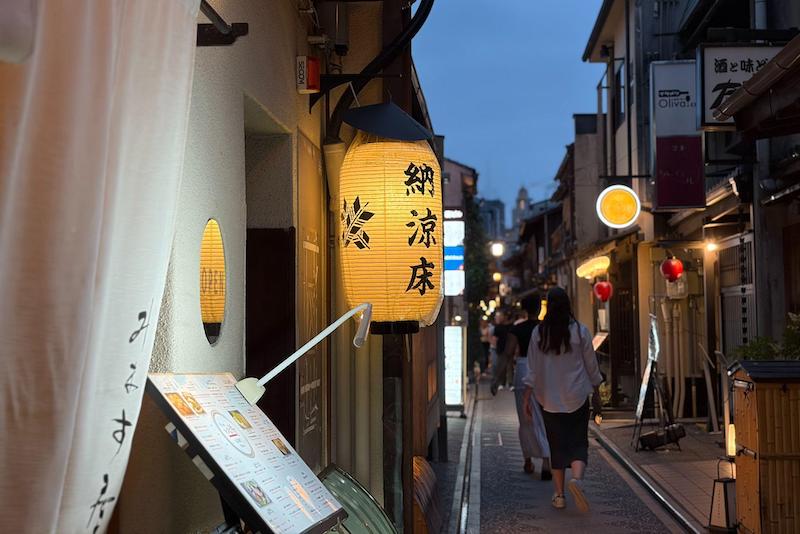
Pontocho is one of the best places to end the main route.
Located near the Kamo River, Pontocho is a narrow street known for its restaurants, lanterns, and atmospheric evening scenery. Pontocho is best experienced in the evening. You do not need to have a restaurant reservation to enjoy it; simply walking through the narrow street is enough to feel Kyoto’s more mature and atmospheric side. The lanterns, wooden facades, and glimpses toward the Kamo River make it one of the most memorable places to end the route.
For a Detective Conan route, this is exactly the kind of place that works well. Even before connecting it to anime, Pontocho feels like a setting where something could happen. The street is compact, slightly hidden, and full of visual detail. In the evening, the lights make it even more cinematic.
Travel Tip: 💡
When taking photos here, be especially careful. Pontocho is a real street with restaurants, staff, residents, and other visitors. Avoid blocking the narrow path, avoid taking close photos of people without permission, and be mindful around restaurant entrances. A good photo can be simple: a lantern, a narrow alley, a glimpse of the river, or the contrast between old wood and modern signs.
Pontocho also works well as a practical final stop because there are many places to eat nearby. After a day of walking, this area gives travelers a natural place to rest, have dinner, and reflect on the route.
Optional Second-Day Add-On: Kurama
If you have more time in Kyoto and want to go deeper into the Detective Conan pilgrimage, Kurama is the optional location I would recommend most.
Kurama is located far north of central Kyoto, so I would not suggest adding it casually to the end of this one-day route. It takes more time and energy than the central Kyoto locations in this guide, and the trip can feel closer to a mountain excursion than a city walk. However, for serious fans, that extra effort can be worthwhile.
The Kurama area is strongly connected with the atmosphere of Crossroad in the Ancient Capital, especially because of its mountain setting, legends, and more mysterious mood. Compared with places like Kiyomizu-dera or Pontocho, Kurama feels much farther removed from everyday Kyoto. That distance is part of its appeal.
If you visit, I recommend treating Kurama as a separate half-day or second-day plan. Wear comfortable shoes, check train times in advance, and avoid going too late in the day, especially if you plan to walk beyond the station and temple area. It is a rewarding addition, but it deserves more time than a quick stop.
Pilgrimage Tips for Fans of Detective Conan
1. Start Early!
Kyoto’s popular areas can become crowded very quickly, especially around Kiyomizu-dera and the surrounding streets. Morning is usually better for both photos and atmosphere.
2. Don’t Rely On Buses
Kyoto buses are useful, but they can be delayed by traffic and crowds. Depending on the route, it may be better to combine walking, trains, subway lines, and buses. A combined approach is more likely to end in a successful experience.
3. Understand Kyoto’s Street Names
I mentioned this previously in the article. Intersections such as Shijo-Karasuma, Kawaramachi-Gojo, and Karasuma-Rokkaku are named after the streets that cross there. Once you understand this, bus stops and map directions become much easier.
4. Scene Comparisons
Next tip is to bring your own notes or screenshots if you want to compare scenes. Some pilgrimage locations are not clearly marked, and there may not be official Detective Conan signs. Preparation helps you enjoy the route without spending too much time searching on your phone.
5. Be Respectful
This one is probably the most important tip. Temples, shrines, streets, restaurants, and residential areas are real places used by local people. A good anime pilgrimage should make you appreciate the city more, not disturb it.
Final Thoughts
A Detective Conan pilgrimage in Kyoto is not only about visiting locations connected to the series. It is about experiencing the real city that gives those stories their atmosphere.
This one-day route through Kyoto Station, Gojo-Ohashi Bridge, Kiyomizu-dera, the Kamo River, and Pontocho gives fans a practical way to experience that atmosphere without rushing too much.
For international Detective Conan fans visiting Kansai, Kyoto is one of the best places to begin. The mysteries may be fictional, but the streets, bridges, temples, and atmosphere are real. That is what makes the pilgrimage worth taking.



Nao is an Osaka based writer with a love for travel and anime. She loves exploring the Kansai region and hopes to inspire readers to visit Japan for their own pilgrimage experiences.
