
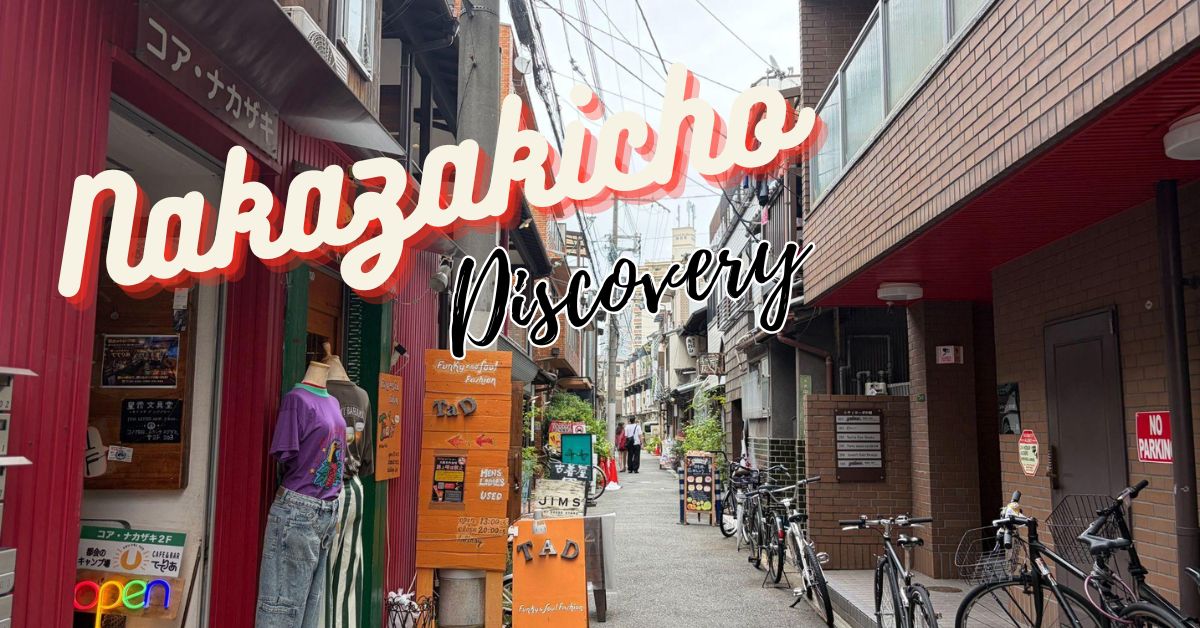
Only a short distance from the glass towers, department stores and enormous railway stations of Umeda, Nakazakicho reveals a completely different side of Osaka. Here, narrow lanes wind between aging wooden houses, small cafés occupy former homes, and racks of vintage clothing appear outside independent shops. Modern apartment buildings rise behind the low rooftops, but the neighborhood itself retains an intimate, almost village-like atmosphere.
Nakazakicho is not a place that needs to be explored according to a strict sightseeing checklist. Its appeal lies in walking without too much of a plan, turning into an interesting side street and seeing what appears next. One lane may lead to a colorful mural, while another may contain a café hidden on the second floor of an old building. A few meters farther on, there might be a vintage shop with clothes displayed outside.
This combination of historic architecture, independent businesses and everyday local life makes Nakazakicho one of central Osaka’s most rewarding neighborhoods to explore slowly.
How to Get to Nakazakicho
The most direct way to reach the area is through Nakazakicho Station on the Osaka Metro Tanimachi Line. Once you leave the station, the neighborhood’s small cafés, vintage shops and narrow residential lanes are only a short walk away.
However, visitors do not necessarily need to navigate another subway line to get there. Nakazakicho can also be reached from Temma Station on the JR Osaka Loop Line. The walk takes a little over ten minutes, making it a useful option for travelers who are already using JR trains or who find Osaka’s underground network difficult to navigate.
The route from Temma also offers an interesting transition. Around the station, the streets are lively and commercial, particularly near the Tenjinbashisuji shopping area. As you continue towards Nakazakicho, the roads gradually become narrower and quieter. Large shops give way to independent businesses, old houses and small lanes that can easily be missed when walking too quickly.
It is also possible to walk from the Osaka Station and Umeda area. This makes Nakazakicho easy to combine with a morning spent shopping, visiting an observation deck or exploring the modern centre of Osaka.
Best Time to Visit Nakazakicho: Why Afternoons Are Ideal
Vintage Shop Opening Hours (Plan for 1:00 PM Onwards)
Nakazakicho may look appealing in the quiet morning, but visitors who are mainly interested in vintage shopping should plan to arrive later in the day. Many of the neighborhood’s independent clothing stores and small businesses open later than conventional shopping centers, with some not beginning business until around lunchtime or the early afternoon.
Arriving from approximately 1:00 p.m. gives visitors a much better chance of finding the vintage shops open. It also creates a convenient half-day itinerary: spend the morning around Osaka Station or Umeda, have lunch, and then continue to Nakazakicho for an afternoon of browsing, walking and café-hopping.
Weekday Strolls vs. Weekend Crowds
A weekday is particularly pleasant for exploring the neighborhood. It is generally easier to look through the smaller shops and appreciate the lanes without the heavier crowds that may appear on weekends. At the same time, Nakazakicho is not an empty heritage district. Several vocational schools are located nearby, so students regularly pass through the area on weekdays and add a young, contemporary energy to the streets.
The result is a district that feels historic without being frozen in the past.
Walking Through Nakazakicho’s Narrow Lanes
The best way to experience Nakazakicho is simply to walk. Although a map is useful for locating a particular café or shop, following only the fastest route would mean missing much of what makes the neighborhood special.
Discovering Pre-War Wooden Houses and Peaceful Backstreets
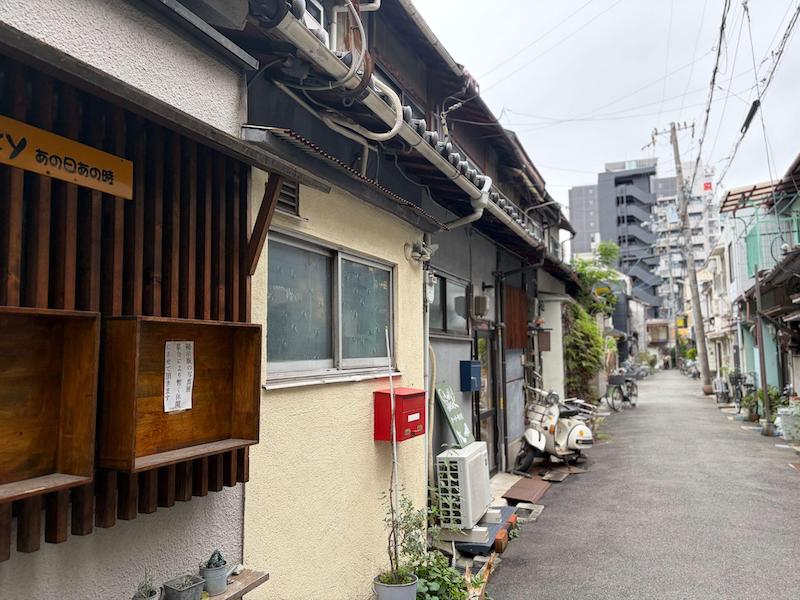
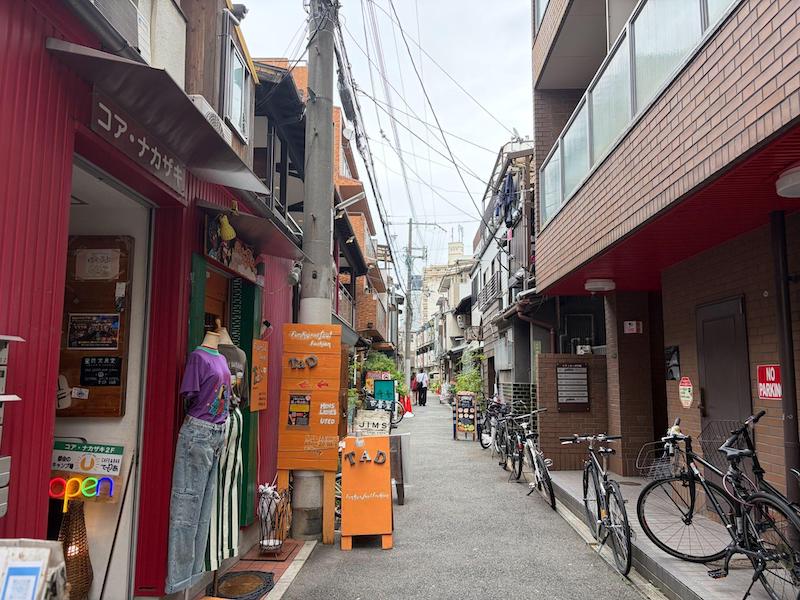
Some streets contain rows of older, low-rise buildings with wooden doors, tiled roofs and narrow façades. Many have been adapted into cafés, clothing stores, galleries or small creative businesses. Others remain private homes, creating an unusual mixture of commercial activity and residential life.
The neighborhood has not been polished into a uniform tourist attraction. Bicycles are parked beside buildings, air-conditioning units and exposed pipes remain visible, and plants grow outside homes and shops. These ordinary details are part of its character. Nakazakicho does not feel preserved behind glass; it continues to be used, changed and lived in.
Eclectic Pop Art, Murals, and Creative Facades
The contrast between old and new is especially striking. From one narrow lane, visitors may see a line of small wooden houses with a modern high-rise building in the distance. Elsewhere, a traditional-looking entrance may stand beside a brightly painted café or a shop covered with signs, illustrations and unusual decorations.
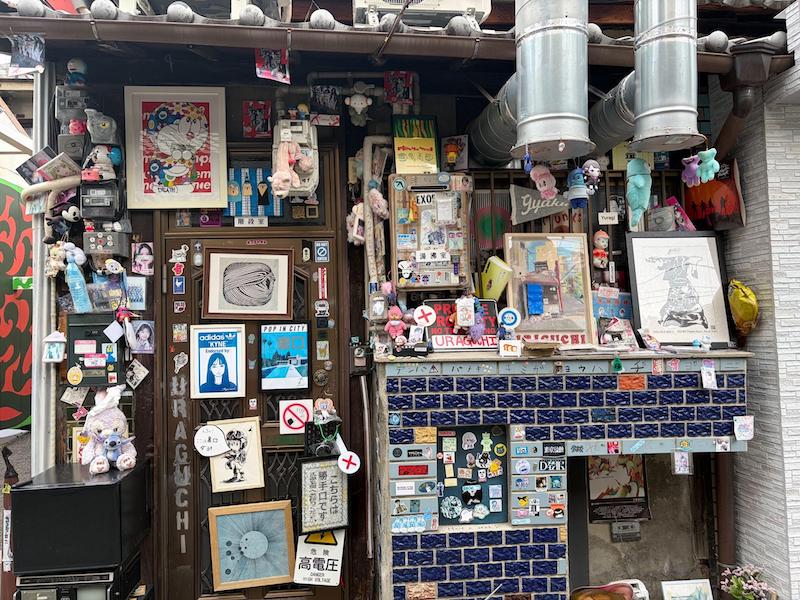
There are also more playful corners. A colorful mural can transform an otherwise ordinary passageway, while one densely decorated building displays artwork, toys, stickers and objects across almost every available surface. These places are difficult to describe as conventional sightseeing spots, but they are exactly the kinds of discoveries that make a walk through Nakazakicho memorable.
Rather than asking, “What is the main attraction?”, it is better to approach the neighborhood with a different question: “What might I find if I turn down this lane?”
A Retro Break at Cafe Taiyo no To
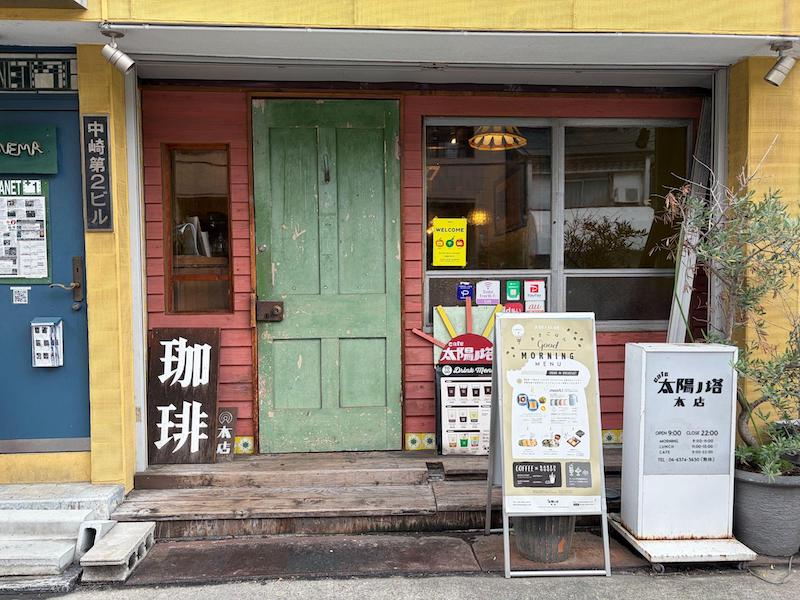
Cafés are an important part of Nakazakicho’s identity, and one of the area’s most recognizable is Cafe Taiyo no To Honten.
Antique Decor and Showa-Style Ambience
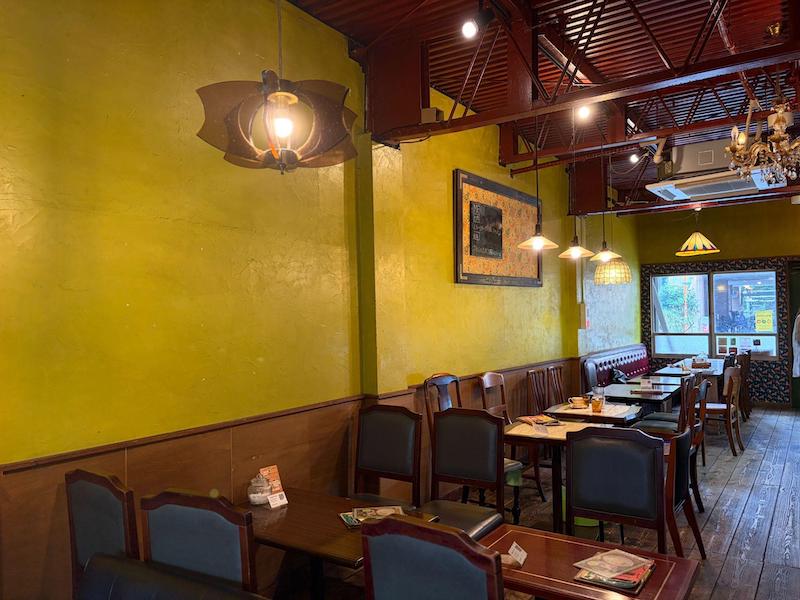
Its exterior immediately stands out. The yellow façade, faded red wooden walls and weathered green door create a colorful, handmade appearance. It feels less like a carefully designed chain café and more like a place that has developed its own personality over time.
That individuality continues inside. Antique-style chairs, wooden flooring, chandeliers and stained-glass-inspired lamps fill the room. The deep red ceiling and yellow-green walls make the space feel theatrical, yet the overall atmosphere remains relaxed. Each decorative element seems slightly different, but together they create a warm retro interior suited to the unusual character of Nakazakicho.
Must-Try Menu Items: Osaka Mixed Juice and Egg Sandwiches
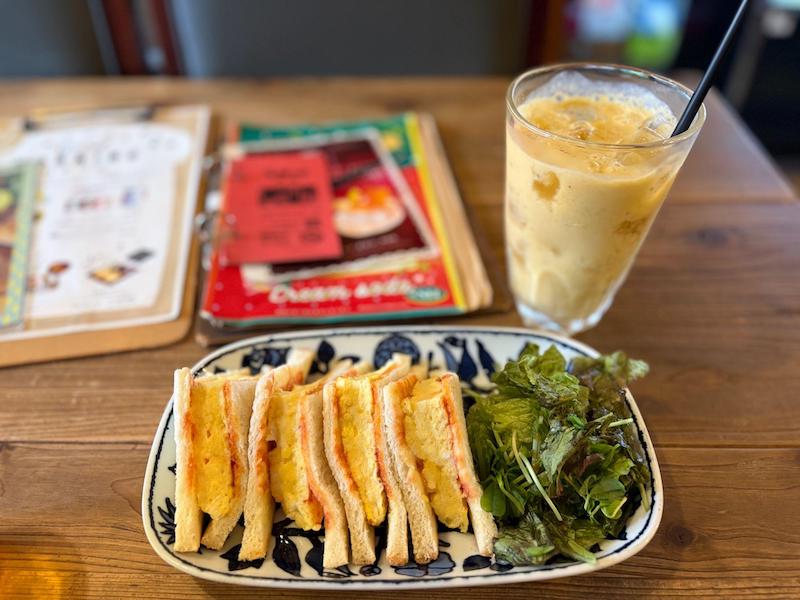
During my visit, I ordered an egg sandwich accompanied by a salad and a glass of mixed juice, a local speciality that originated in Osaka. The flavor varies slightly from café to café, and the version served here was especially delicious.
Cafe Taiyo no To is not simply a convenient place to stop for coffee. Its exterior and interior reflect the wider appeal of Nakazakicho: an old building given a new purpose, filled with color, creativity and details that do not feel mass-produced.
It is a good place to begin a visit before the vintage shops open, or to rest after spending part of the afternoon exploring them.
Guide to Nakazakicho Vintage Clothing & Thrift Store
Vintage clothing is one of the main reasons many younger visitors come to Nakazakicho. Unlike a shopping mall, where multiple brands are gathered inside a single building, the neighborhood’s vintage stores are scattered across different lanes.
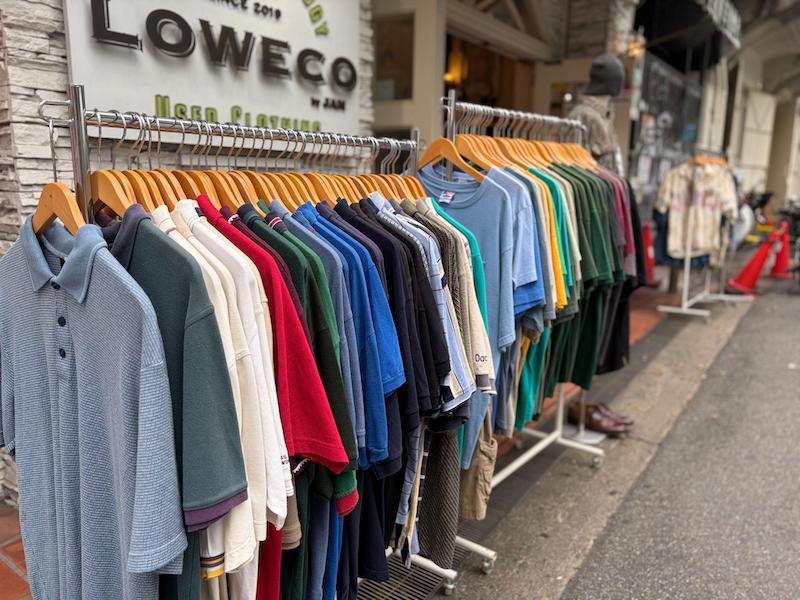
Some are easy to notice because they display racks of shirts, jackets or trousers outside. Others occupy narrow spaces on the ground floor or upper level of an older building. There may be several shops close together on one street, followed by another cluster around the next corner.
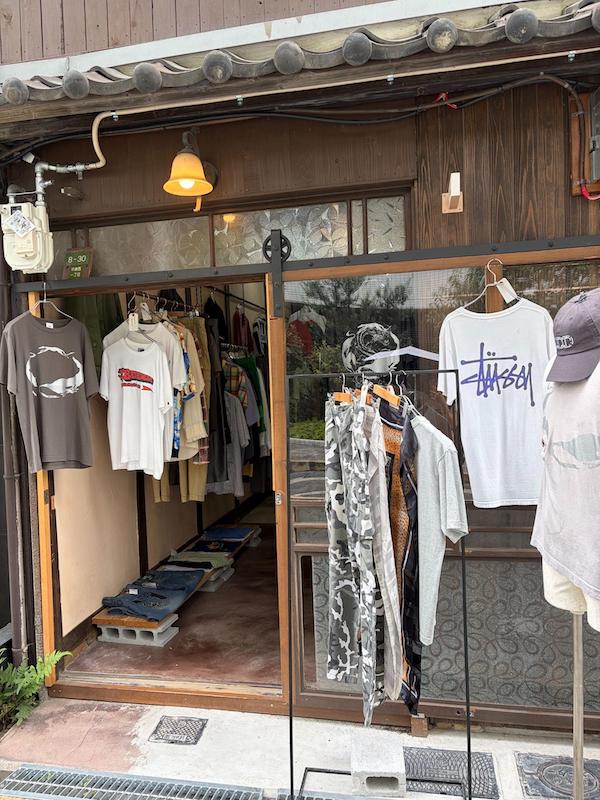
Each store has its own style. Some focus on colorful American casual clothing, while others favor workwear, street fashion, sportswear or more carefully selected pieces. Prices, sizes and conditions also vary, so browsing several shops is part of the experience.
The outdoor clothing racks make the area feel open and informal. Even before entering a shop, visitors can look through a selection and get a sense of the store’s style. On a quiet weekday afternoon, there is time to browse without rushing and compare items across different shops.
One of the most amusing details is the smell. In lanes where several vintage shops stand close together, the distinctive scent of second-hand clothing sometimes drifts out onto the street. Before even seeing every shop sign, it can feel as though the neighborhood itself is announcing that you have entered its vintage-shopping area.
There is no need to arrive with a specific item in mind. Nakazakicho is better suited to slow browsing and accidental discoveries. A shirt, jacket or accessory that would be difficult to find in a large retailer may be waiting inside a small store that was not part of the original plan.
A Historic District with Young Energy
Although Nakazakicho is often described as a historic neighborhood, it should not be imagined as a silent district consisting only of preserved buildings.
Several vocational schools and other educational facilities are located nearby, so students regularly pass through the area on weekdays. Their presence helps explain why the neighborhood supports so many casual cafés, affordable places to eat, vintage stores and creative businesses.
This creates one of Nakazakicho’s most appealing contrasts. The streets and buildings may look nostalgic, but the people using them represent contemporary Osaka. Students, shop owners, residents, photographers and visitors all share the same compact network of lanes.
The old architecture provides the setting, but the neighborhood’s current community gives it life. Nakazakicho may look nostalgic, but it is not frozen in the past.
Practical Tips for Visiting Nakazakicho, Osaka
Allow around two to three hours to enjoy Nakazakicho without rushing, particularly when combining vintage shopping with a café visit. Individual shops may close irregularly or change their opening hours, so checking their official social media accounts on the day of your visit is useful.
There is no single route that everyone needs to follow. Choose one or two places that interest you, then leave enough time to explore the surrounding lanes.
Old Osaka, Still Evolving
Nakazakicho’s charm does not come from one famous landmark. It comes from the combination of many small experiences: opening a weathered café door, looking through a rack of old shirts, noticing a mural between buildings or seeing a modern tower appear above a traditional roofline.
Despite being close to one of Osaka’s busiest commercial districts, the neighborhood encourages visitors to slow down. It rewards curiosity more than careful planning and makes even a simple afternoon walk feel like a series of discoveries.
Nakazakicho is not a neighborhood to rush through with a checklist. Its appeal lies in turning down an unfamiliar lane, stopping at a café, browsing old clothes and finding something that you had not planned to see.

Nao is an Osaka based writer with a love for travel and anime. She loves exploring the Kansai region and hopes to inspire readers to visit Japan for their own pilgrimage experiences.
