
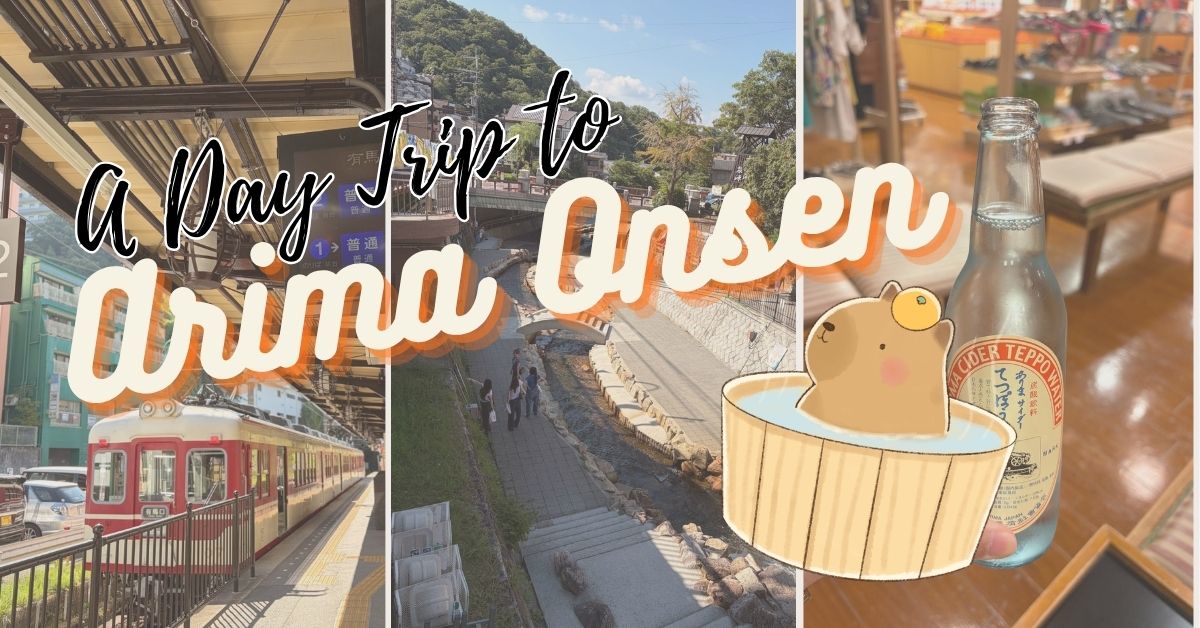
It is hard to believe that a genuine mountain hot spring town can be reached in about an hour from Osaka. Arima Onsen lies beyond Kobe, surrounded by the Rokko Mountains, yet it is easy to visit entirely by public transport. This makes it an appealing destination for travelers who want to experience a traditional onsen town without hiring a car or planning a long journey.
I visited Arima as a day trip, hoping to explore the town, try its local food and spend the afternoon at Taiko no Yu. Although the town is compact, the day felt like a proper escape from the city. The increasingly scenic train ride, narrow streets, unusual snacks and richly colored hot spring water all made the trip feel much more distant than it really was.
Quick Overview & Travel Details
Travel times, fares, pass conditions and opening hours can change, so check the relevant official websites before traveling.
Getting to Arima Onsen by Train
The final part of the train journey was one of the most enjoyable surprises of the day. As the train travelled farther from the city, the surroundings became greener and more mountainous. The short section between Arimaguchi and Arima Onsen was especially memorable. The train moved through thick forest and narrow mountain scenery, making it feel almost like a small attraction rather than an ordinary local railway.
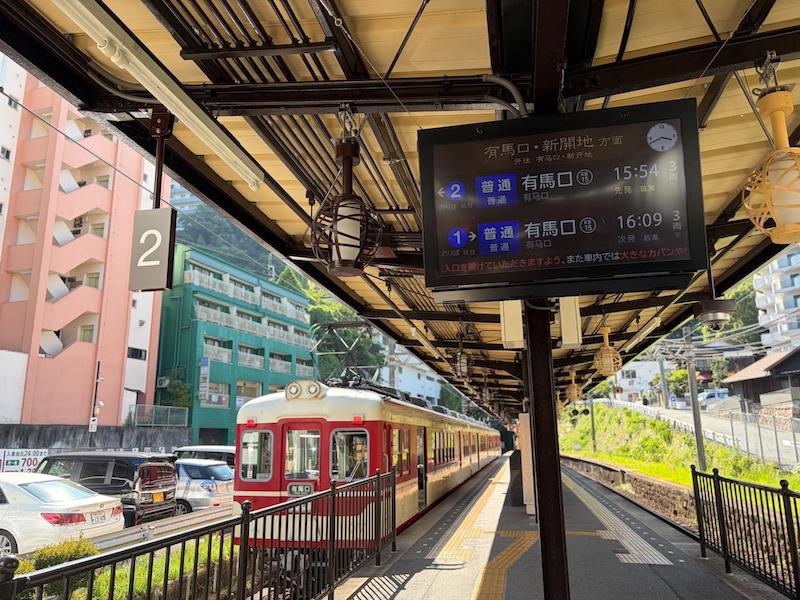
The changing landscape created a sense of anticipation before I had even arrived. One moment I was traveling through urban Kansai, and soon afterwards I was looking out at trees, hills and winding tracks. Although the journey is relatively short, Arima’s mountain setting makes it feel much farther from city life.
For travelers without a car, this accessibility is a major advantage. Arima offers the atmosphere of a remote onsen town while remaining realistic as a day trip from Osaka or Kobe.
For travelers who want to experience a real Japanese hot spring town but find more distant destinations difficult, Arima is an excellent choice.
Strolling Through Arima: Traditional Lanes & River Views
After leaving the station, I walked towards the central shopping streets. Arima is not a large modern resort. Its appeal comes from narrow lanes, slopes, traditional inns, souvenir shops and small food businesses gathered closely together.
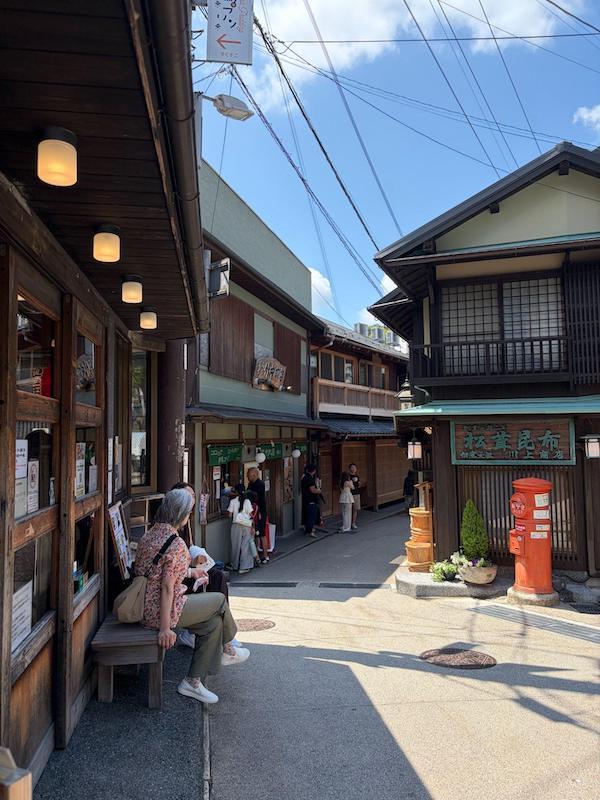
Walking is part of the experience because there is always something new around the next corner. A carbonated rice cracker shop may sit beside a meat shop, while an old building or small spring source appears farther up the hill. The town is compact enough to explore without following a strict itinerary.
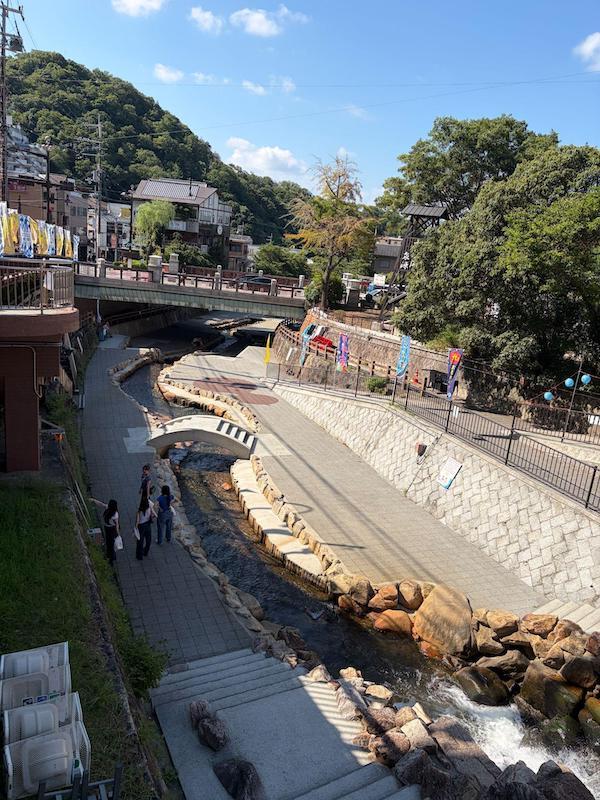
However, visitors should not assume that every shop stays open throughout the day. During my visit, several rice cracker shops appeared to take an afternoon break, with some reopening after 2 p.m. It is worth checking the hours of any particular shop you hope to visit.
Arima Onsen Street Food: What to Eat Between Soaks
Takenaka Meat Shop: Kobe Beef & Wagyu “Gorokke”
My first snack was an Arima “gorokke” from Takenaka Meat Shop. Croquettes are common throughout Japan, but this one felt more substantial than the typical version. The coating was freshly fried and satisfyingly crisp, while the inside was soft and rich. Most importantly, there were noticeable pieces of meat inside rather than only a faint meaty flavor.
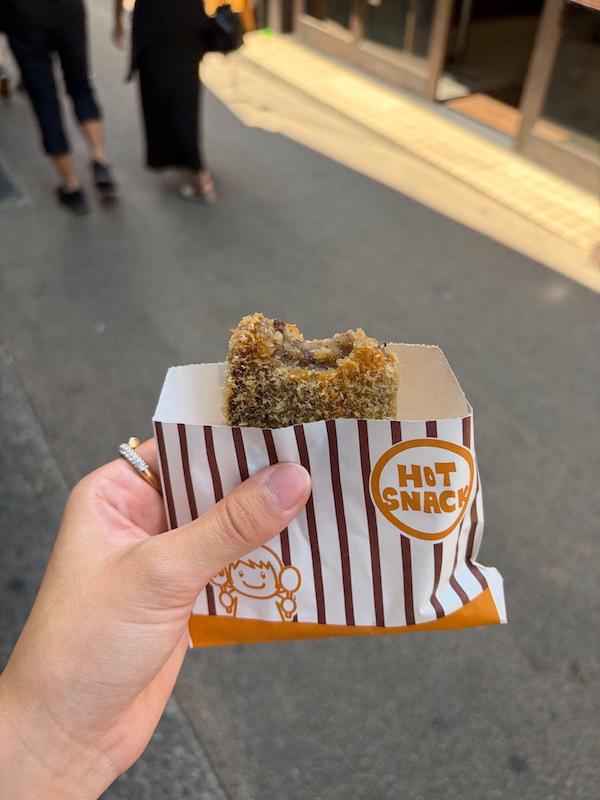
Takenaka Meat Shop describes the limited Arima gorokke as containing pieces of Kobe beef and Kuroge Wagyu beef, and it can sell out early in the day. It was a perfect street-food snack: warm and satisfying, but still small enough to leave room for more.
Ariman: Steamed Wild Boar Buns with Sansho Pepper
Later, I stopped at Arima-an for its signature Ariman. It resembles a standard Japanese steamed meat bun, but the filling is made with wild boar and seasoned with sansho pepper. The bun was exceptionally soft and fluffy, with a slight sweetness that balanced the savory meat. The sansho added a gentle aromatic sharpness without overpowering the filling.
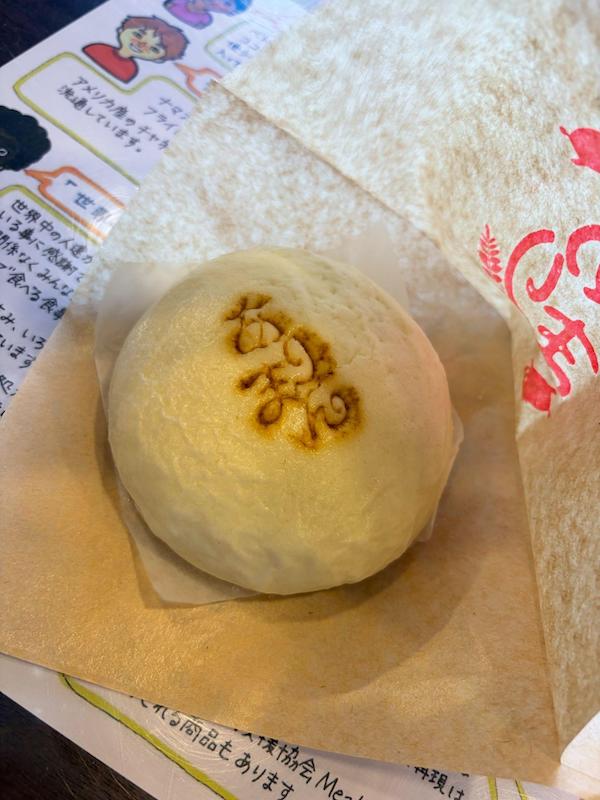
Even travelers who are unsure about trying wild boar may find it surprisingly approachable. Arima-an also had indoor seating, which made it a comfortable place to pause rather than eating outside. The gorokke and Ariman offered two different sides of Arima’s food culture: one familiar and comforting, and the other distinctly connected to the surrounding mountains.
Yunohanado Hompo: The Five-Second Carbonated Rice Cracker
The most entertaining food experience was the freshly baked carbonated rice cracker at Yunohanado Hompo. Tansan senbei are one of Arima’s best-known souvenirs. The packaged version is thin and crisp, but the freshly baked version has a texture that lasts for only a few seconds.
After paying, I was told to take my first bite within five seconds. The plain version cost ¥100 when I visited. Other flavors were available, including chocolate and strawberry, for around ¥200. Payment was cash only, so keeping a few coins ready is useful.
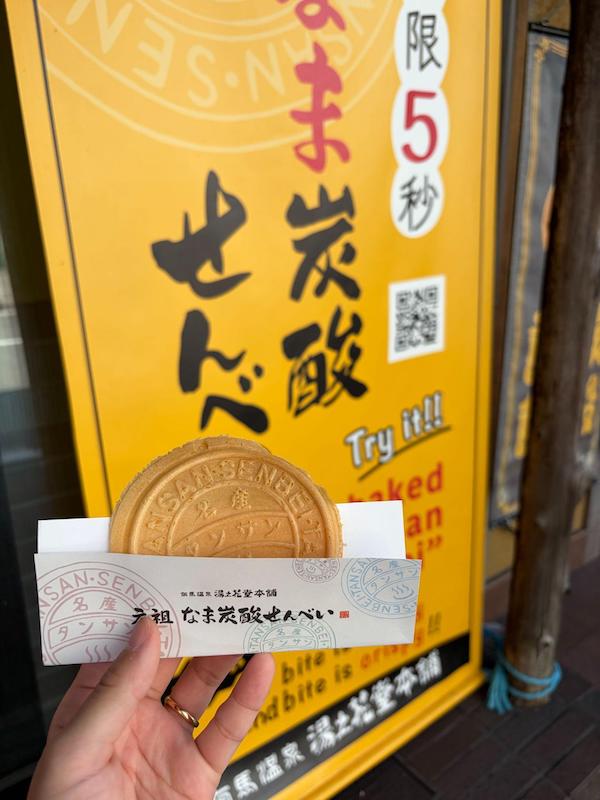
The “five-second expiry” may sound like a marketing phrase, but the texture genuinely changed as I ate it. At first, the cracker was warm, soft and slightly pliable. Within seconds, it cooled and became brittle and crispy. Yunohanado Hompo explains that this soft, freshly baked texture can only be experienced during the first five seconds after baking.
It was more than another snack or souvenir. I could taste the moment the cracker transformed, which made the experience both memorable and fun.
Soaking at Taiko no Yu: Arima’s Historic Hot Spring Resort
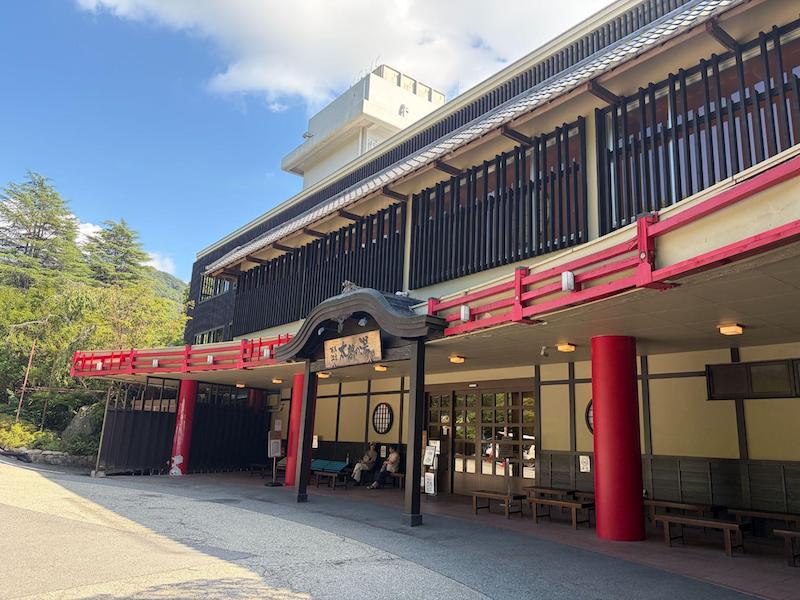
After exploring the shopping streets, I headed to Taiko no Yu. The facility is approximately ten minutes on foot from Arima Onsen Station, but the route includes a very steep uphill section. The distance does not look intimidating on a map, yet the climb was much harder than I expected.
Take the Free Station Shuttle Instead of Walking
Travelers carrying luggage, visiting with older family members or simply hoping to save their energy should consider using the shuttle bus that operates between Arima Onsen Station and Taiko no Yu. The climb is possible, but it can feel demanding after walking around town.
Inside, Taiko no Yu felt calm and spacious. Rather than resembling a basic public bath, it felt like a historical hot spring theme park, with decorative details inspired by Toyotomi Hideyoshi.
Toyotomi Hideyoshi’s Legacy and Bathing in Arima’s Famous Kinsen
Toyotomi Hideyoshi had a strong connection with Arima Onsen. He visited repeatedly and helped restore its buildings and bathing facilities after natural disasters. The word taiko is closely associated with Hideyoshi, which explains the facility’s name and historical theme.
References to him appeared throughout the bathing area. Gourds could be seen in several places, reflecting the symbol famously connected with Hideyoshi.
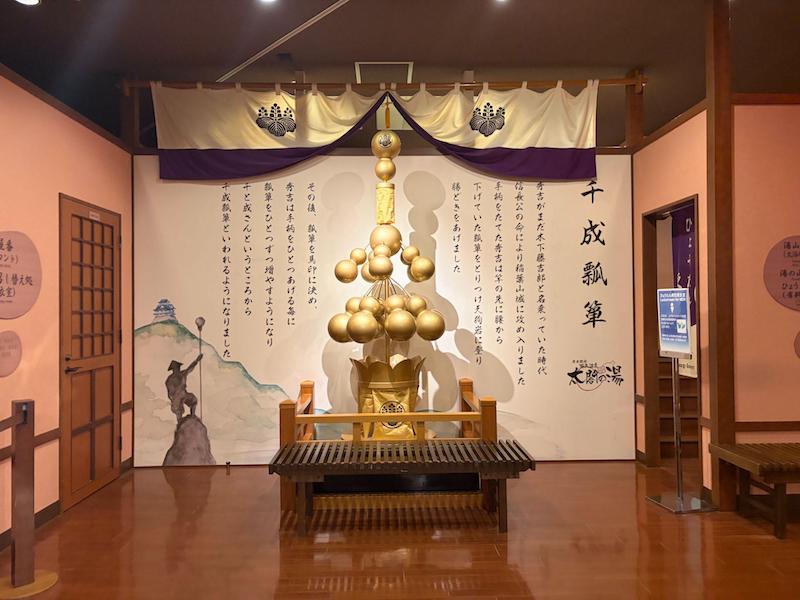
The design also felt different from an ordinary sento. There were bridge-like features and changes in level, giving the baths a sense of discovery.
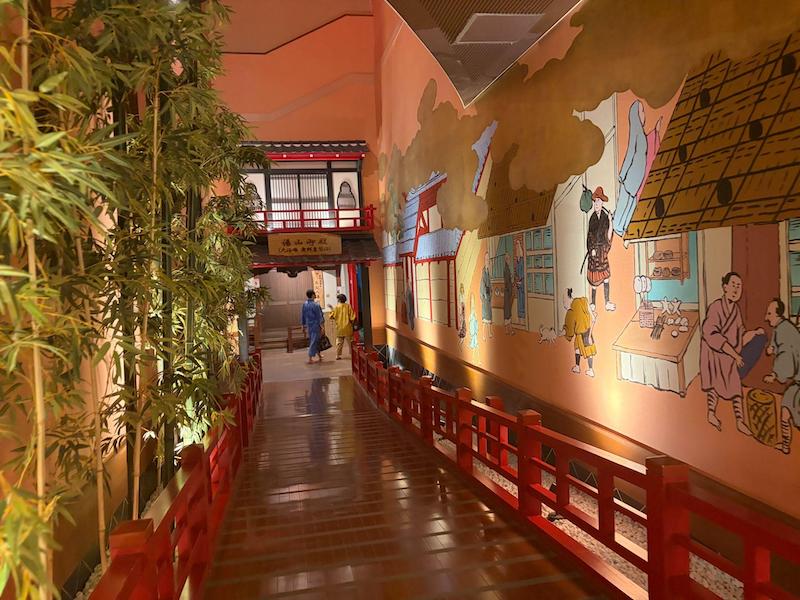
Experiencing the Healing Powers of Kinsen (Gold Spring) & Ginsen
The most striking experience was Kinsen, Arima’s famous “gold spring”. Despite the name, the water looked orange or reddish-brown rather than bright gold. The color was strong enough to surprise a first-time visitor. It comes from the iron and salt content of the spring, which gives the water its distinctive cloudy appearance.
Once I entered, however, the unusual color quickly became part of the appeal. The water felt deeply warming and relaxing. Because it is a mineral-rich spring, anyone unfamiliar with strong onsen water may prefer a shorter first soak and a rest between baths.
The bathing space included several different pools rather than one simple bath. This made it easy to try one, pause and then move to another. Taiko no Yu also offers Arima’s clear Ginsen, or “silver spring”, alongside Kinsen and other bathing experiences.
Relaxing on the Rooftop Open-Air Bath
The outdoor area was reached by going upstairs. This became one of my favorite parts of the facility. It was open to the sky, and during the daytime I could look up at the blue sky above the baths. I could easily imagine it feeling even more peaceful at night, with the possibility of seeing stars overhead.
There were enough different baths that I gradually stopped checking the time. That was exactly what I had hoped for: not simply a quick bath, but a place where I could slow down and let the afternoon pass.
Post-Bath Refreshment: Sparkling Arima Cider
After bathing, I bought a bottle of Arima Cider from the shop. Coffee milk may be the classic drink after visiting a Japanese public bath, but in Arima, the local cider felt like the better choice.
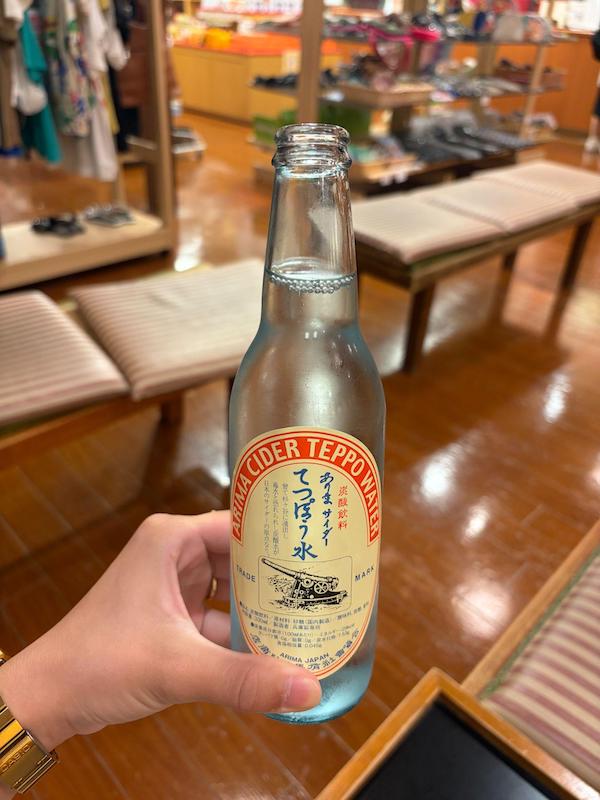
Its carbonation was exceptionally strong, creating a sharp, lively sensation with every sip. It was not overly sweet, so it tasted clean and refreshing after the hot baths. The drink is deliberately made with stronger carbonation to recreate an old-fashioned style associated with Arima.
Between the five-second cracker and this powerful cider, carbonation became an unexpected theme of the day.
Arima Onsen Day Trip or Overnight Stay?
Arima Onsen works extremely well as a day trip. It is close to Osaka, accessible without a car and compact enough to combine food, walking and bathing in one visit. For travelers who want to experience a real Japanese hot spring town but find more distant destinations difficult, Arima is an excellent choice.
At the same time, my visit made me want to return overnight. Staying in a ryokan would reveal another side of the town: a traditional dinner, quieter streets after the daytime visitors leave, and the contrast between the evening and early morning atmosphere. I would also like to return in a cooler season. Summer was still enjoyable, but the steep streets made me think autumn or winter might suit the experience even better.
A day was enough to enjoy Arima, but not enough to feel finished with it. By the time I boarded the train home, I was already imagining a future visit with one night in a ryokan, an evening bath and a slower morning in the mountains.

Nao is an Osaka based writer with a love for travel and anime. She loves exploring the Kansai region and hopes to inspire readers to visit Japan for their own pilgrimage experiences.
